Key Takeaways
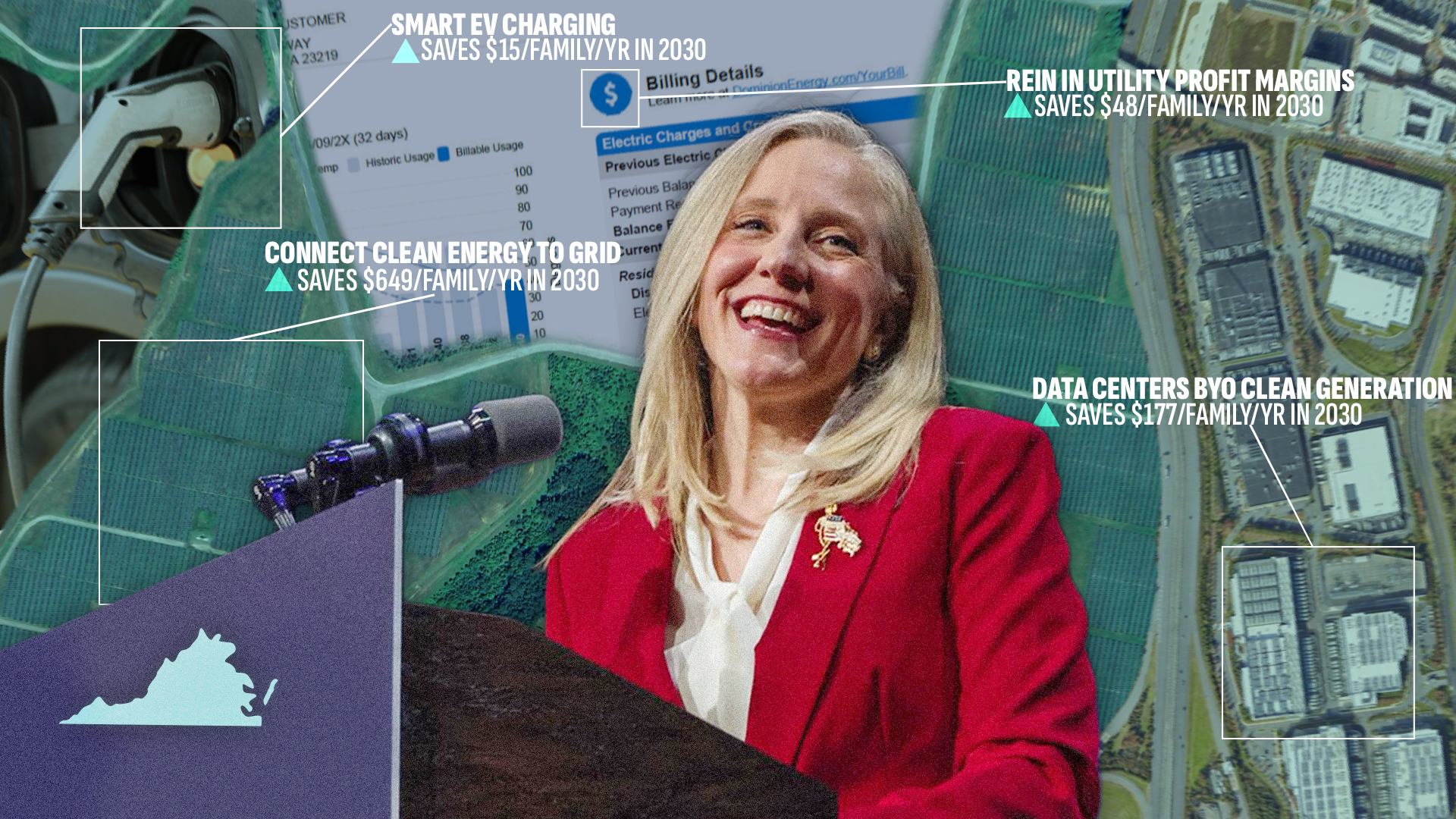
- Four state policies could save the average Virginia household $712 per year on electric bills, according to a new report from Synapse Energy Economics
- Synapse’s report also shows that state policy action could cut total statewide energy costs by $16.6 billion by 2030 compared to the status quo
- Access the PDF version of this memo
Background
Soaring data center power demand is starting to strain energy supplies and drive up costs for Virginia households and businesses. High utility profit margins and the Trump administration’s repeal of clean energy tax credits for affordable, faster-to-build sources like wind, solar, and battery storage are only making things worse.
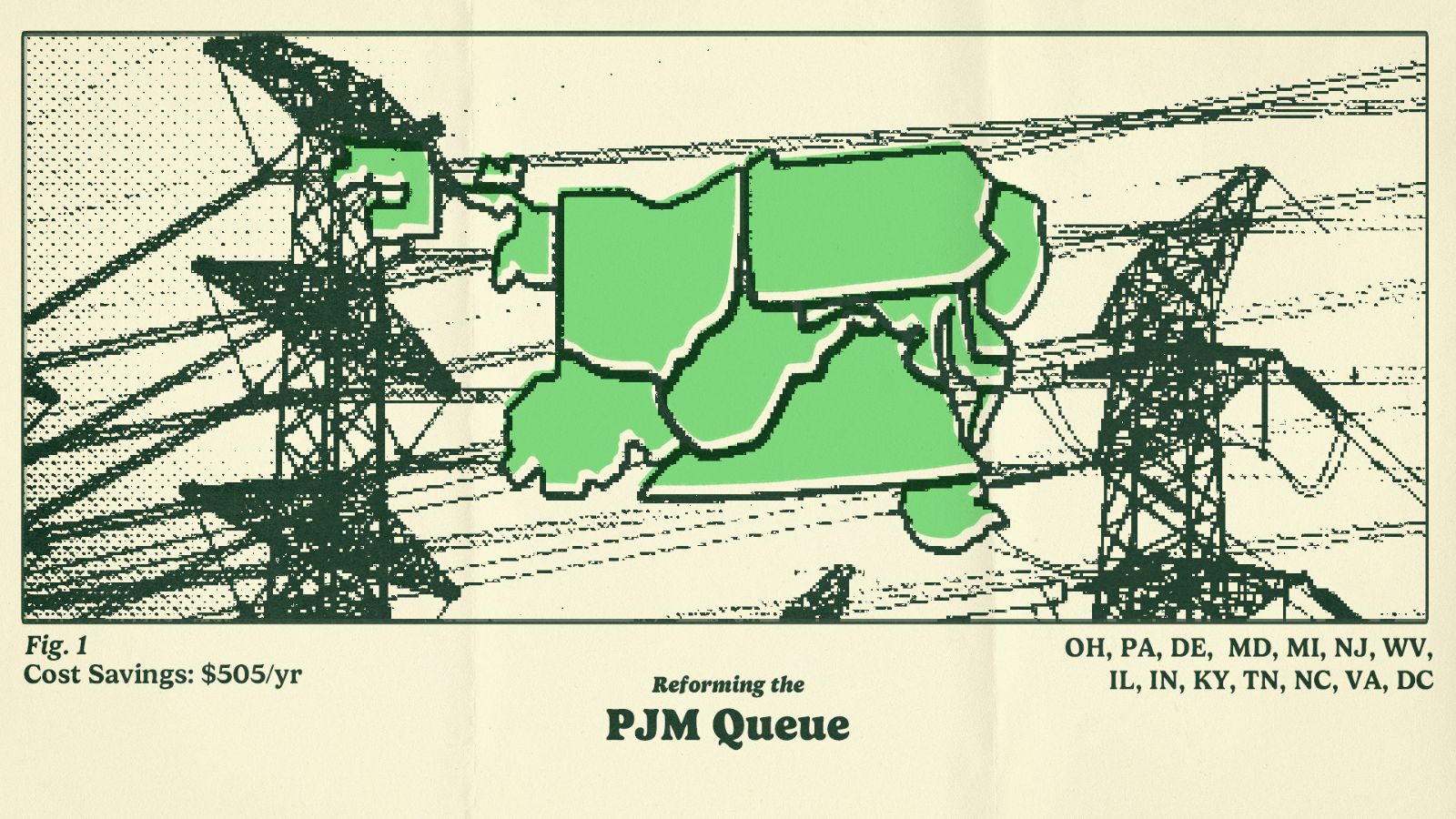
PJM Interconnection—which manages the nation’s largest grid covering 67 million people across Virginia and 12 other states—has stalled around two thousand new, low-cost clean power projects in its clogged interconnection queue. These years-long delays, averaging five years per project, have forced Virginia to rely on costly, aging fossil plants and to fall behind on meeting increasing demand with clean energy.
Meanwhile, Dominion Energy has asked state regulators to approve a roughly 15 percent rate increase—about $21 more per month for the average household—to fund new projects to meet surging electricity demand from Virginia’s rapidly expanding data center industry.
Key Findings From Synapse’s New Report
As residents across Virginia face skyrocketing electricity bills, a new independent report from Synapse Energy Economics finds that state leaders can take immediate action to deliver much-needed relief to Virginia households. Synapse's modeling evaluated the combined consumer impact of four policy interventions:
- Getting clean energy projects connected to the grid
- Data centers supplying their own affordable, clean energy
- Adopting smart EV charging programs
- Reining in utility profit margins
According to their findings, residents could see their monthly power bills lower by 18 percent by 2030 through a combination of the policy actions outlined in the report. Statewide, this could cumulatively lead to $16.6B in savings by 2030.